
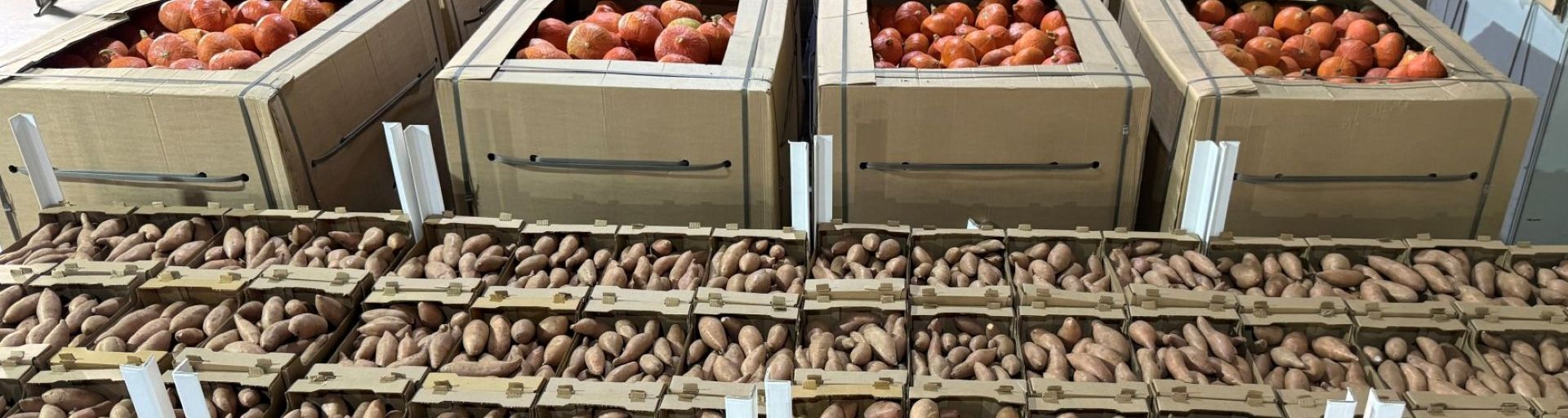
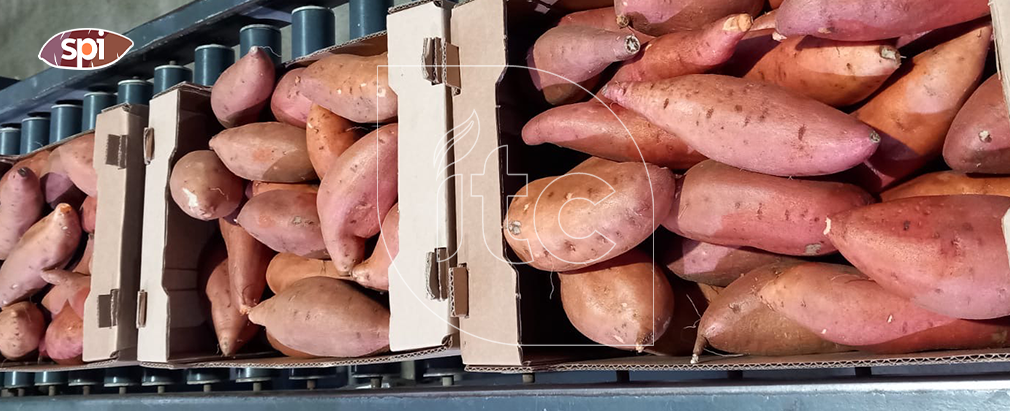
Sweet Potato Imports are undergoing a fundamental transformation, moving away from a decades-old script. While major buyers in Europe and the Middle East once looked toward traditional Western heartlands as the gold standard for volume, the 2024–2025 seasons marked a watershed moment. As climatic volatility and rising operational costs began to squeeze historical production hubs, a new powerhouse emerged from the banks of the Nile, fundamentally altering the landscape of the global trade.
Egypt is no longer just a seasonal alternative; it has become the primary pivot for major retailers and wholesalers. In 2025, Egypt’s agricultural exports reached record highs, with sweet potato volumes surging to nearly 387,000 metric tonnes. This shift reflects a fundamental rewiring of the global supply chain, driven by an urgent need for stability and cost-efficiency in an increasingly unpredictable world.
Egypt’s ascent is the result of a deliberate alignment of geography, economics, and modern agricultural policy. While many global regions struggle with erratic weather, Egypt offers a level of consistency that is becoming rare in the international market.
This stability is particularly attractive as other major producers most notably in North Carolina, USA have recently grappled with hurricane induced harvest disruptions and unpredictable rainfall that forced early digging and compromised storage life. By leveraging stable water supplies, Egyptian growers consistently produce high-yielding varieties like the Beauregard and Bellevue that meet strict international specifications.
In a post-2020 world where “distance is cost,” Egypt’s proximity to key markets is a decisive weapon. Shipping from Port Said to Rotterdam typically takes under a week a fraction of the 14-to-21-day transit required for transatlantic shipments. This doesn’t just lower freight costs; it drastically reduces the carbon footprint per ton, a metric increasingly mandated by EU environmental regulations.
The most significant shift for business leaders has been the institutionalization of Contract Farming. To secure supply, Egyptian exporters now enter formal agreements with farmers, providing seeds, financing, and technical oversight. This model provides:
Predictable Volumes: Shielding buyers from local market price spikes.
Quality Assurance: Direct compliance with EU MRL (Maximum Residue Level) standards.
Economic Stability: Using a competitive exchange rate to lock in long-term, cost-effective contracts.
The shift toward Egypt is also a response to the mounting “risk premium” associated with traditional sourcing. Industry analysts observe that historical leaders are facing an existential reckoning with biological and environmental threats.
In North America, for instance, growers are fighting a dual battle against climatic volatility and persistent pests like Bacterial Ring Rot and the Sweet Potato Weevil. These are not merely agricultural hurdles; they are trade barriers. Stringent phytosanitary restrictions mean that a single pest discovery can trigger export bans, leaving importers with empty shelves.
When combined with the rising costs of labor and regulatory compliance in developed economies, the traditional model often lacks the cost-competitiveness and reliability that modern retail giants demand.
Modern procurement is moving away from looking at the “price per ton” toward a “Total Cost of Ownership” (TCO) model. This is where the Egyptian proposition becomes undeniable.
When an importer chooses Egypt, they are buying into a system where reliability is guaranteed by infrastructure rather than the whims of Atlantic weather patterns. They gain agility through shorter transit times and financial security through the integrated contract farming model.
As the 2026 season approaches, the global sourcing map has been redrawn. The sweet potato has found a new, more stable home in the sands of North Africa. For the global buyer, the choice is clear: in an era of uncertainty, Egypt offers the most resilient path from soil to shelf.
Secure Your Supply Chain for the 2026 Season
As the global market pivots toward Egypt, ensuring a reliable, high-quality partnership is more critical than ever. We specialize in bridging the gap between Egypt’s fertile fields and your local market through transparent contract farming and rigorous quality control.
Contact US to discuss your volume requirements and lock in a more resilient sourcing strategy.
